Buy my-food.eu ?
We are moving the project
my-food.eu .
Are you interested in purchasing the domain
my-food.eu ?
domain@kv-gmbh.de · 0541-91531010
Buy my-food.eu ?
What is a sustainable solution for developing countries?
A sustainable solution for developing countries involves investing in renewable energy sources such as solar, wind, and hydro power. By shifting away from fossil fuels, these countries can reduce their carbon emissions and contribute to global efforts to combat climate change. Additionally, investing in education and healthcare infrastructure can help improve the quality of life for citizens and create a more stable and productive society. Finally, promoting sustainable agriculture practices and supporting local businesses can help stimulate economic growth while preserving natural resources for future generations. **
Is organic sustainable?
Organic farming practices can be more sustainable than conventional methods in terms of reducing chemical inputs, promoting biodiversity, and improving soil health. However, there are challenges to the scalability and efficiency of organic farming, which can impact its overall sustainability. For example, organic farming typically requires more land and labor to produce the same amount of food as conventional methods, which can limit its ability to meet global food demand. Additionally, the transportation and distribution of organic products can have a higher environmental impact due to their shorter shelf life and the need for refrigeration. Overall, while organic farming has many sustainable benefits, there are also limitations to its long-term sustainability on a large scale. **
Similar search terms for Countries
Top-Angebote
Products related to Countries:
-
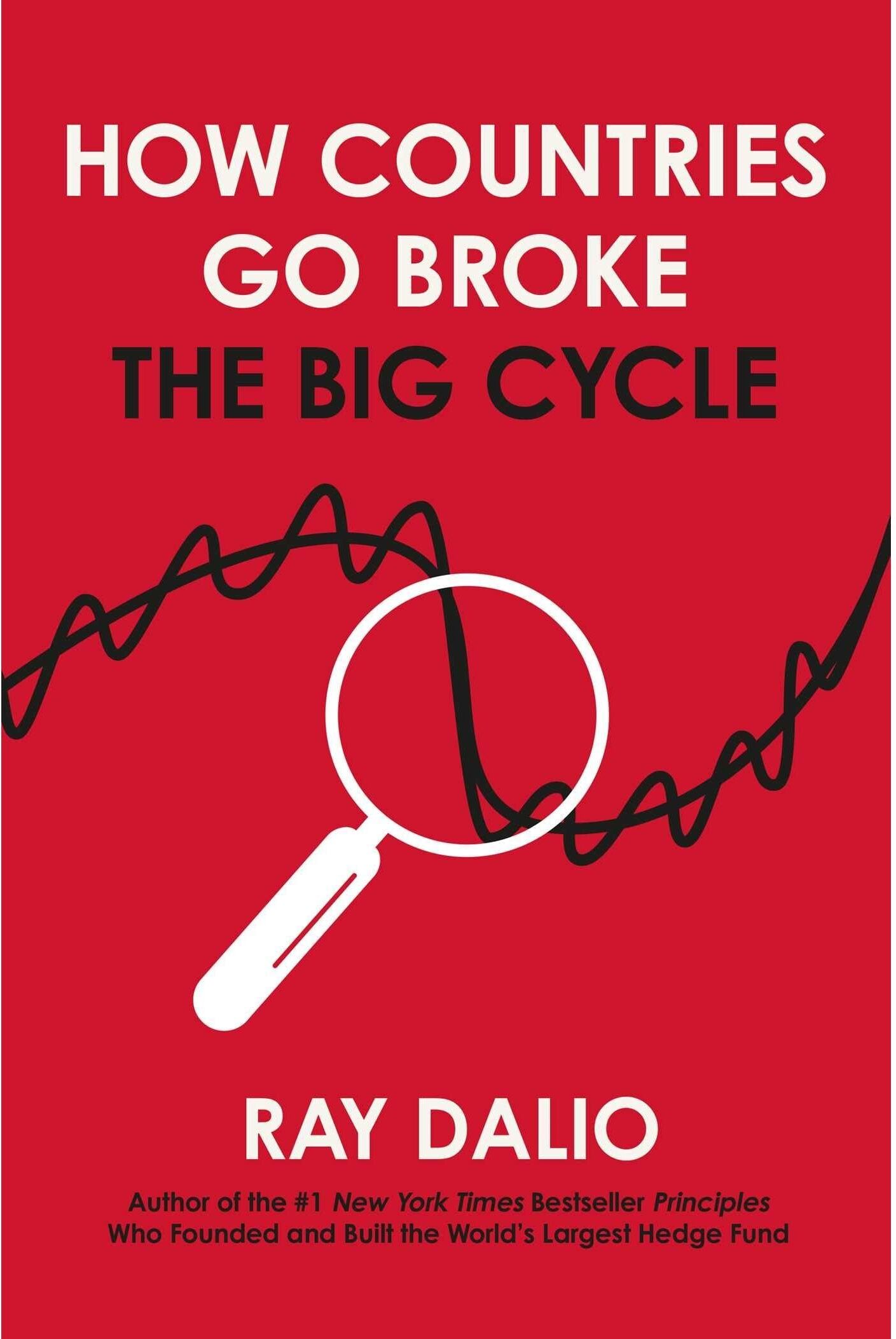
How Countries Go Broke Principles for Navigating the Big Debt Cycle, Where We Are Headed, and What We Should Do by Ray Dalio - Non Fiction - Hardback Simon & SchusterDo big government debts threaten our collective well-being? Are there limits to debt growth? Can a big, important reserve currency country like the United States really go broke – and what would that look like? For decades, politicians, policymakers and investors have debated these questions, but the answers have eluded them. In this groundbreaking book, Ray Dalio, one of the greatest investors of our time who anticipated the 2008 global financial crisis and the 2010–12 European debt crisis, shares for the first time his detailed explanation of what he calls the 'Big Debt Cycle'. Understanding this cycle is critical for helping policymakers, investors and the general public grasp where we are and where we are headed with the debt issue. Dalio's model points toward surprisingly straightforward solutions for dealing with the debt problems that the US, Europe, Japan and China face today. How Countries Go Broke also shows how these debt problems are related to the other forces – political within countries, geopolitical between countries, natural (droughts, floods and pandemics) and technological (most importantly, AI) – that together are causing what Dalio calls the 'Overall Big Cycle' changes in the world order. By reading this book, you will improve your understanding of what's happening now and what to do about it.15,99 £*Shipping: 2,99 £Secure redirect to the provider
-
TIMELESS Handmade Tablecloth by Sustainable Threads Organic Cotton Handwoven Ikat Fair TradeTIMELESS Tablecloth Add rich heritage and extraordinary craftsmanship to your table with our TIMELESS Tablecloth, meticulously handmade from organic cotton and woven on traditional manual looms.152,00 $*Shipping: 0,00 $Secure redirect to the provider
-
Kozy Kitchen Serving Tray, Breakfast Tray, Organic Bamboo, Tea Lovers Gift, Sustainable GiftA single thing can make a bad day better. Especially a perfect morning. Everyone's idea of an ideal breakfast consists of a serving tray with a delicate cup of tea or that strong coffee with freshly squeezed juice.27,29 $*Shipping: 0,00 $Secure redirect to the provider
-
Hape Kitchen Healthy Basics Food Playset, 10 PiecesHAPE KITCHEN FOOD PLAYSET: HEALTHY BASICS - FOOD PLAYSET - 10 PIECES - An easy-to-tote watering can is a must for young aspiring gardeners! Kids love the fun bright colors and playful design of these compact watering cans.36,99 $*Shipping: 0,00 $Secure redirect to the provider


-
How healthy is fresh milk from the local farmer?
Fresh milk from a local farmer can be a healthy option as it is less processed and may contain fewer additives than store-bought milk. It is also likely to be produced from cows that are grass-fed and raised in a more natural environment, which can result in higher nutrient content. However, it is important to ensure that the milk is properly handled and stored to prevent contamination and spoilage. Additionally, individuals with lactose intolerance or milk allergies should be cautious when consuming fresh milk. **
-
Why do many countries steal Turkish food?
Many countries are drawn to Turkish food because of its rich and diverse flavors, as well as its historical and cultural significance. Turkish cuisine has been influenced by various civilizations and cultures over the centuries, resulting in a unique and varied culinary tradition. Additionally, the use of fresh and high-quality ingredients, as well as the emphasis on traditional cooking methods, make Turkish food highly sought after around the world. As a result, many countries seek to incorporate Turkish dishes into their own culinary repertoire, either by directly adopting recipes or by drawing inspiration from Turkish cooking techniques and flavors. **
-
Which countries are Balkan countries?
The Balkan countries are located in the southeastern region of Europe and include Albania, Bosnia and Herzegovina, Bulgaria, Croatia, Greece, Kosovo, Montenegro, North Macedonia, Romania, Serbia, and Slovenia. These countries are characterized by their diverse cultures, histories, and landscapes, and are often considered a bridge between the East and the West. The term "Balkan" is derived from the Balkan Mountains, which run through the region. **
-
What is the typical food in Islamic countries?
The typical food in Islamic countries varies depending on the region, but some common elements include rice, bread, lamb, chicken, and a variety of spices such as cumin, coriander, and turmeric. Many dishes are also centered around vegetables, legumes, and fruits. Some popular dishes include biryani, kebabs, hummus, falafel, and couscous. Islamic countries also have a rich tradition of sweets and desserts, such as baklava, kunafa, and dates. **


Which Balkan countries are Islamic countries?
The Balkan countries with a significant Muslim population are Albania, Bosnia and Herzegovina, and Kosovo. These countries have a long history of Islamic influence and have a majority Muslim population. Islam has played a significant role in shaping the culture, traditions, and architecture of these countries. While other Balkan countries also have Muslim communities, these three countries are considered Islamic countries due to their majority Muslim population. **
What are industrialized countries and developing countries?
Industrialized countries are those that have advanced infrastructure, technology, and high levels of income and standard of living. These countries have highly developed economies and industries, and typically have a high level of urbanization and access to modern amenities. Developing countries, on the other hand, are those that are still in the process of industrialization and have lower levels of income and standard of living. These countries often have less advanced infrastructure and technology, and may have a higher proportion of their population engaged in agriculture. Developing countries are working towards improving their economic and social conditions to reach the level of industrialized countries. **
Top-Angebote
Products related to Countries:
-
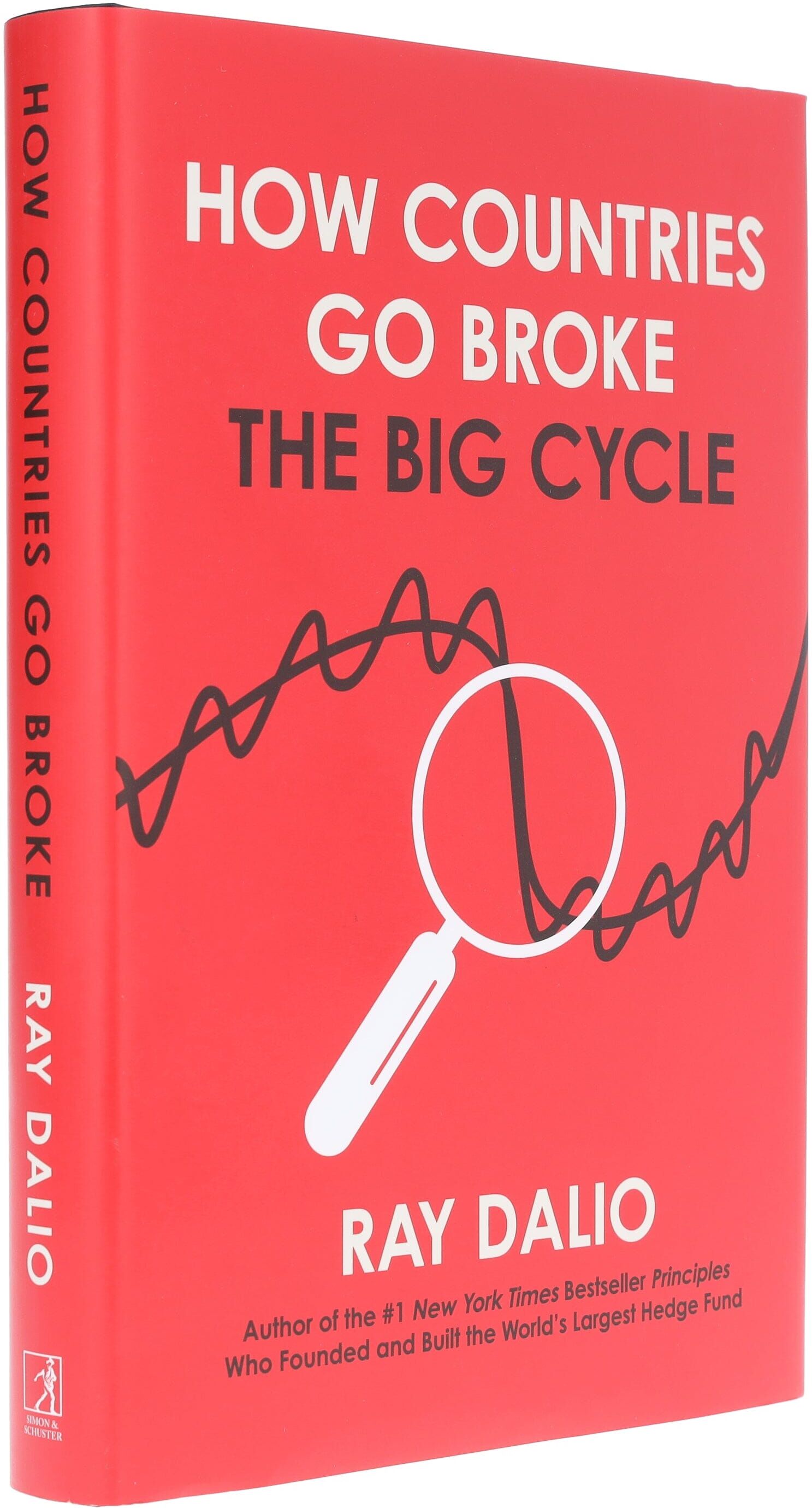
Simon and Schuster UK How Countries Go Broke: Principles for Navigating the Big Debt Cycle, Where We Are Headed, and What We Should DoAn urgent warning about the global economy from Ray Dalio, the #1 New York Times bestselling author of Principles. Do big government debts threaten our collective well-being? Are there limits to debt growth? Can a big, important reserve currency country like the United States really go broke – and what would that look like? For decades, politicians, policymakers and investors have debated these questions, but the answers have eluded them. In this groundbreaking book, Ray Dalio, one of the greatest investors of our time who anticipated the 2008 global financial crisis and the 2010–12 European debt crisis, shares for the first time his detailed explanation of what he calls the 'Big Debt Cycle'. Understanding this cycle is critical for helping policymakers, investors and the general public grasp where we are and where we are headed with the debt issue. Dalio's model points toward surprisingly straightforward solutions for dealing with the debt problems that the US, Europe, Japan and China face today. How Countries Go Broke also shows how these debt problems are related to the other forces – political within countries, geopolitical between countries, natural (droughts, floods and pandemics) and technological (most importantly, AI) – that together are causing what Dalio calls the 'Overall Big Cycle' changes in the world order. By reading this book, you will improve your understanding of what's happening now and what to do about it.17,99 £*Shipping: 2,99 £Secure redirect to the provider
-
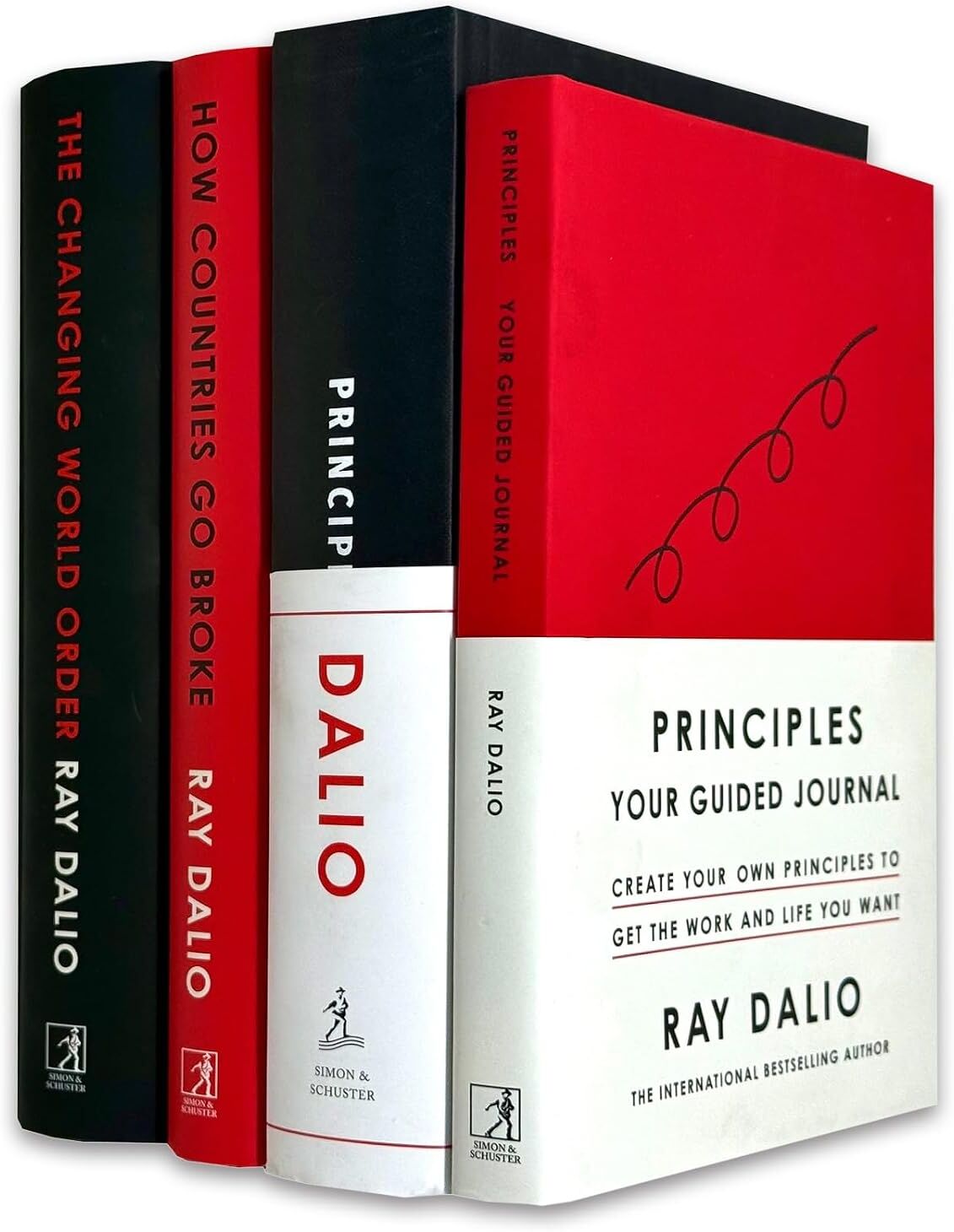
Ray Dalio Collection (Principles: Life and Work, The Changing World Order, How Countries Go Broke & Guided Journal) 4 Books Set - Non Fiction - Hardback Simon & SchusterTitles in this Set: 1. Principles: Life and Work 2. Principles for Dealing with the Changing World Order 3. How Countries Go Broke: The Big Cycle 4. Principles: Your Guided Journal Description: Principles: Life and Work In 1975, Ray Dalio founded an investment firm, Bridgewater Associates, out of his two-bedroom apartment in New York City. Forty years later, Bridgewater has made more money for its clients than any other hedge fund in history and grown into the fifth most important private company in the United States, according to Fortune magazine. Dalio himself has been named to Time magazine’s list of the 100 most influential people in the world. Along the way, Dalio discovered a set of unique principles that have led to Bridgewater’s exceptionally effective culture, which he describes as “an idea meritocracy that strives to achieve meaningful work and meaningful relationships through radical transparency.” It is these principles, and not anything special about Dalio—who grew up an ordinary kid in a middle-class Long Island neighborhood—that he believes are the reason behind his success. In Principles, Dalio shares what he’s learned over the course of his remarkable career. He argues that life, management, economics, and investing can all be systemized into rules and understood like machines. The book’s hundreds of practical lessons, which are built around his cornerstones of “radical truth” and “radical transparency,” include Dalio laying out the most effective ways for individuals and organizations to make decisions, approach challenges, and build strong teams. He also describes the innovative tools the firm uses to bring an idea meritocracy to life, such as creating “baseball cards” for all employees that distill their strengths and weaknesses, and employing computerized decision-making systems to make believability-weighted decisions. While the book brims with novel ideas for organizations and institutions, Principles also offers a clear, straightforward approach to decision-making that Dalio believes anyone can apply, no matter what they’re seeking to achieve. Principles for Dealing with the Changing World Order A few years ago, Ray Dalio noticed a confluence of political and economic conditions he hadn’t encountered before. They included huge debts and zero or near-zero interest rates that led to massive printing of money in the world’s three major reserve currencies; big political and social conflicts within countries, especially the US, due to the largest wealth, political and values disparities in more than 100 years; and the rising of a world power (China) to challenge the existing world power (US) and the existing world order. The last time that this confluence occurred was between 1930 and 1945. This realisation sent Dalio on a search for the repeating patterns and cause/effect relationships underlying all major changes in wealth and power over the last 500 years. In this remarkable and timely addition to his Principles series,...35,99 £*Shipping: 0,00 £Secure redirect to the provider
-
How Countries Go Broke Principles for Navigating the Big Debt Cycle, Where We Are Headed, and What We Should Do by Ray Dalio - Non Fiction - Hardback Simon & SchusterDo big government debts threaten our collective well-being? Are there limits to debt growth? Can a big, important reserve currency country like the United States really go broke – and what would that look like? For decades, politicians, policymakers and investors have debated these questions, but the answers have eluded them. In this groundbreaking book, Ray Dalio, one of the greatest investors of our time who anticipated the 2008 global financial crisis and the 2010–12 European debt crisis, shares for the first time his detailed explanation of what he calls the 'Big Debt Cycle'. Understanding this cycle is critical for helping policymakers, investors and the general public grasp where we are and where we are headed with the debt issue. Dalio's model points toward surprisingly straightforward solutions for dealing with the debt problems that the US, Europe, Japan and China face today. How Countries Go Broke also shows how these debt problems are related to the other forces – political within countries, geopolitical between countries, natural (droughts, floods and pandemics) and technological (most importantly, AI) – that together are causing what Dalio calls the 'Overall Big Cycle' changes in the world order. By reading this book, you will improve your understanding of what's happening now and what to do about it.15,99 £*Shipping: 2,99 £Secure redirect to the provider
-
TIMELESS Handmade Tablecloth by Sustainable Threads Organic Cotton Handwoven Ikat Fair TradeTIMELESS Tablecloth Add rich heritage and extraordinary craftsmanship to your table with our TIMELESS Tablecloth, meticulously handmade from organic cotton and woven on traditional manual looms.152,00 $*Shipping: 0,00 $Secure redirect to the provider
-
What is a sustainable solution for developing countries?
A sustainable solution for developing countries involves investing in renewable energy sources such as solar, wind, and hydro power. By shifting away from fossil fuels, these countries can reduce their carbon emissions and contribute to global efforts to combat climate change. Additionally, investing in education and healthcare infrastructure can help improve the quality of life for citizens and create a more stable and productive society. Finally, promoting sustainable agriculture practices and supporting local businesses can help stimulate economic growth while preserving natural resources for future generations. **
-
Is organic sustainable?
Organic farming practices can be more sustainable than conventional methods in terms of reducing chemical inputs, promoting biodiversity, and improving soil health. However, there are challenges to the scalability and efficiency of organic farming, which can impact its overall sustainability. For example, organic farming typically requires more land and labor to produce the same amount of food as conventional methods, which can limit its ability to meet global food demand. Additionally, the transportation and distribution of organic products can have a higher environmental impact due to their shorter shelf life and the need for refrigeration. Overall, while organic farming has many sustainable benefits, there are also limitations to its long-term sustainability on a large scale. **
-
How healthy is fresh milk from the local farmer?
Fresh milk from a local farmer can be a healthy option as it is less processed and may contain fewer additives than store-bought milk. It is also likely to be produced from cows that are grass-fed and raised in a more natural environment, which can result in higher nutrient content. However, it is important to ensure that the milk is properly handled and stored to prevent contamination and spoilage. Additionally, individuals with lactose intolerance or milk allergies should be cautious when consuming fresh milk. **
-
Why do many countries steal Turkish food?
Many countries are drawn to Turkish food because of its rich and diverse flavors, as well as its historical and cultural significance. Turkish cuisine has been influenced by various civilizations and cultures over the centuries, resulting in a unique and varied culinary tradition. Additionally, the use of fresh and high-quality ingredients, as well as the emphasis on traditional cooking methods, make Turkish food highly sought after around the world. As a result, many countries seek to incorporate Turkish dishes into their own culinary repertoire, either by directly adopting recipes or by drawing inspiration from Turkish cooking techniques and flavors. **
Similar search terms for Countries
-
Kozy Kitchen Serving Tray, Breakfast Tray, Organic Bamboo, Tea Lovers Gift, Sustainable GiftA single thing can make a bad day better. Especially a perfect morning. Everyone's idea of an ideal breakfast consists of a serving tray with a delicate cup of tea or that strong coffee with freshly squeezed juice.27,29 $*Shipping: 0,00 $Secure redirect to the provider
-
Hape Kitchen Healthy Basics Food Playset, 10 PiecesHAPE KITCHEN FOOD PLAYSET: HEALTHY BASICS - FOOD PLAYSET - 10 PIECES - An easy-to-tote watering can is a must for young aspiring gardeners! Kids love the fun bright colors and playful design of these compact watering cans.36,99 $*Shipping: 0,00 $Secure redirect to the provider
-
Hape Kitchen Healthy Salad Food Playset, 39 PiecesHAPE HEALTHY SALAD - WOODEN FOOD PLAYSET - 39 PIECES - Prepare a healthy meal with this fantastic salad playset! Includes pieces of egg, avocado, cucumber, tomato, onion and other vegetables which can be sliced using the realistic play knife.34,99 $*Shipping: 0,00 $Secure redirect to the provider
-
TIMELESS Handmade Tablecloth by Sustainable Threads Organic Cotton Handwoven Ikat Fair TradeTIMELESS Tablecloth Add rich heritage and extraordinary craftsmanship to your table with our TIMELESS Tablecloth, meticulously handmade from organic cotton and woven on traditional manual looms.220,00 $*Shipping: 0,00 $Secure redirect to the provider
-
Which countries are Balkan countries?
The Balkan countries are located in the southeastern region of Europe and include Albania, Bosnia and Herzegovina, Bulgaria, Croatia, Greece, Kosovo, Montenegro, North Macedonia, Romania, Serbia, and Slovenia. These countries are characterized by their diverse cultures, histories, and landscapes, and are often considered a bridge between the East and the West. The term "Balkan" is derived from the Balkan Mountains, which run through the region. **
-
What is the typical food in Islamic countries?
The typical food in Islamic countries varies depending on the region, but some common elements include rice, bread, lamb, chicken, and a variety of spices such as cumin, coriander, and turmeric. Many dishes are also centered around vegetables, legumes, and fruits. Some popular dishes include biryani, kebabs, hummus, falafel, and couscous. Islamic countries also have a rich tradition of sweets and desserts, such as baklava, kunafa, and dates. **
-
Which Balkan countries are Islamic countries?
The Balkan countries with a significant Muslim population are Albania, Bosnia and Herzegovina, and Kosovo. These countries have a long history of Islamic influence and have a majority Muslim population. Islam has played a significant role in shaping the culture, traditions, and architecture of these countries. While other Balkan countries also have Muslim communities, these three countries are considered Islamic countries due to their majority Muslim population. **
-
What are industrialized countries and developing countries?
Industrialized countries are those that have advanced infrastructure, technology, and high levels of income and standard of living. These countries have highly developed economies and industries, and typically have a high level of urbanization and access to modern amenities. Developing countries, on the other hand, are those that are still in the process of industrialization and have lower levels of income and standard of living. These countries often have less advanced infrastructure and technology, and may have a higher proportion of their population engaged in agriculture. Developing countries are working towards improving their economic and social conditions to reach the level of industrialized countries. **
* All prices are inclusive of VAT and, if applicable, plus shipping costs. The offer information is based on the details provided by the respective shop and is updated through automated processes. Real-time updates do not occur, so deviations can occur in individual cases. ** Note: Parts of this content were created by AI.